How to cost out a recipe and calculate the cost of baked goods
A US home-bakery costing method built from ingredients, packaging, labor, yield and margin, with a worked cookie example.
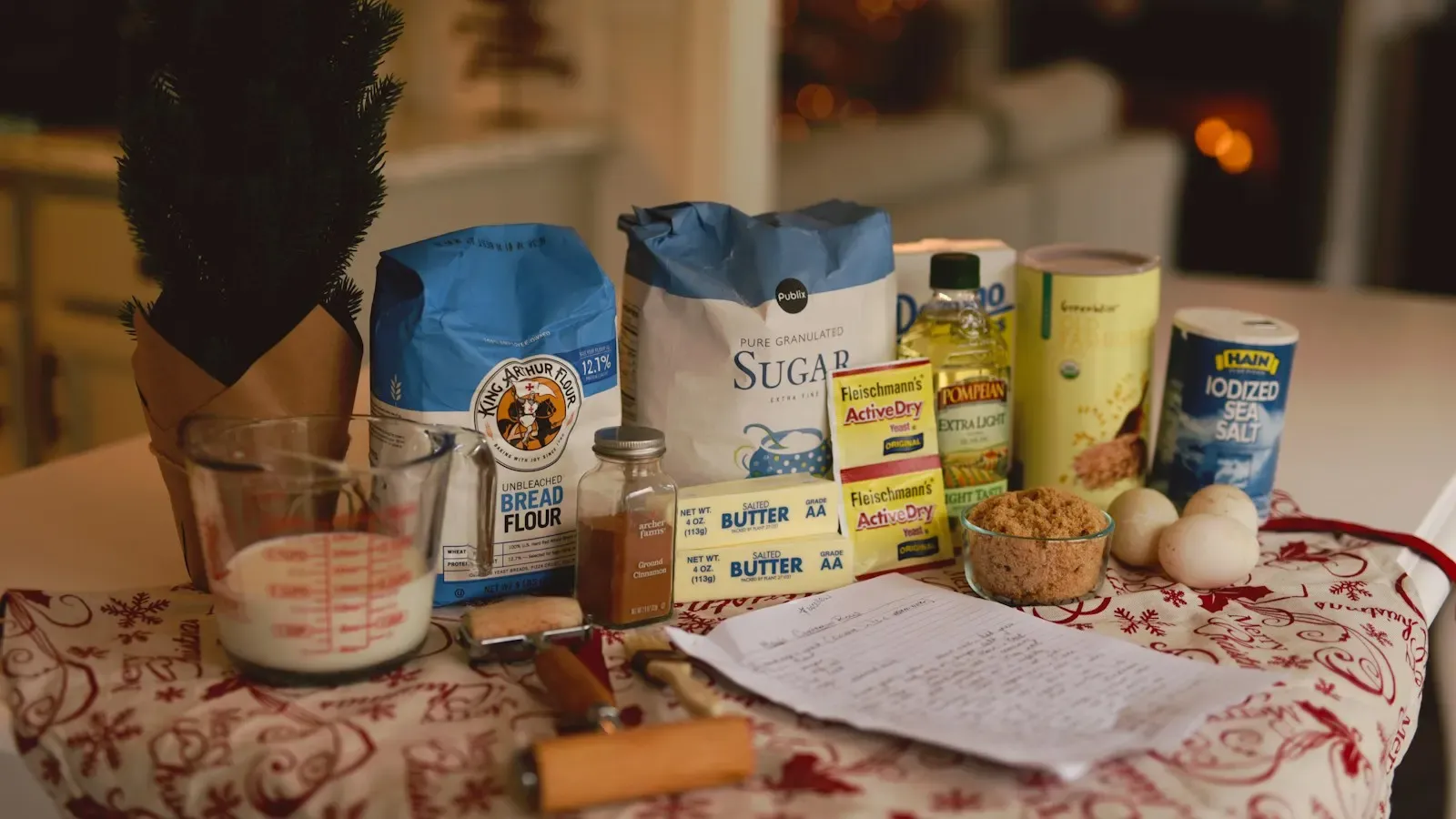
To cost out a recipe, you need one number: the full cost of a sellable unit. In the cookie example below, a 24-cookie batch costs $38.84 before margin, or $1.62 per cookie. At a 35% margin, the selling price is $2.49 each.
“Cost out a recipe”, “recipe costing” and “calculate the cost of baked goods” all name the same job, and this page is that job start to finish. Once the cost exists, the separate decision of what to charge is in the home bakery pricing guide.
That answer is less glamorous than checking what another baker charges on Instagram. It is also the one that tells you whether a sold-out weekend paid you or merely emptied the pantry.
The U.S. Small Business Administration separates costs by how they behave. Variable costs rise as you produce more. Fixed costs still show up when sales slow down. A home bakery needs both views, because flour is not the only thing your customer is buying.
The bakery cost formula
For one batch:
batch cost = ingredients + packaging + labor + batch extras
Then:
unit cost = batch cost / sellable yield
Then set your margin:
selling price = unit cost / (1 - margin)
The order matters. Packaging sits inside the cost base. If a cookie box leaves with the order, it is part of what that order costs you.
Worked cookie batch
This example is deliberately simple. It is not a national price list.
| Item | Batch cost |
|---|---|
| Ingredients | $15.00 |
| Packaging | $3.84 |
| Labor, 1 hour at $18 | $18.00 |
| Batch extras | $2.00 |
| Total batch cost | $38.84 |
| Sellable yield | 24 cookies |
The unit cost is:
$38.84 / 24 = $1.62
With a 35% target margin:
$1.62 / 0.65 = $2.49
Sixteen cents of packaging per cookie looks harmless until you sell 300 cookies. Then it is $48. Ignore small numbers in a batch business and they eventually introduce themselves.
Ingredient cost means the amount you used
A 5 lb bag of flour is about 2,270 g. If the bag costs $8 and a recipe uses 300 g, the flour cost in that recipe is about $1.06, not $8.
That is why the useful unit inside a recipe sheet is cost per gram:
package price / package weight in grams = cost per gram
The app is metric and count only, so a US baker has one extra step when the shelf speaks pounds. Record the shelf pack as the shopper sees it, then convert the pack weight to grams for the recipe math.
That friction is real. Pretending cups work when the product cannot accept cups would be worse.
Use the yield you can sell
A recipe may promise 30 cookies and give you 27 that meet your size standard. Your cost divides by 27.
The three cookies that broke, spread into each other or became “quality control” still consumed ingredients and time. They do not get to disappear from the denominator.
A small yield error can do more damage than a small ingredient-price change because it hits every unit in the batch.
Labor is a cost before profit
The Bureau of Labor Statistics reports a median baker wage of $17.86 per hour for May 2025. This guide rounds that to $18 per hour as a national benchmark, not a commandment.
If you need $25 per productive hour for your business to make sense, use $25. If you enter zero because you are “only baking at home,” the calculator will faithfully tell you how to price a business that does not pay the baker.
Your labor time should include active production connected to the batch: scaling, mixing, portioning, decorating, packing and the batch-specific cleanup.
Do not automatically count every oven minute as active labor if you are producing something else at the same time. Do count capacity when a product blocks your only oven and prevents other work. The math needs judgment, not theater.
Fixed costs belong to the month
SBA’s break-even guidance treats rent, salaries, insurance and similar obligations as fixed costs. A home bakery has its own version: business insurance, software, permits, a dedicated phone line, market fees, equipment depreciation and the share of utilities that belongs to production.
You can allocate those monthly costs across expected units, orders or productive hours. Pick one method and keep it consistent enough to compare months.
Do not hide monthly overhead inside a made-up ingredient markup. If butter rises, butter should change. If your annual permit rises, overhead should change. Those are different signals.
Payment fees are not the same as ingredient cost
Model the fees and commissions charged by the sales channels you actually use.
Square currently shows 2.6% plus 15 cents for common in-person card payments on its free plan. Stripe shows 2.9% plus 30 cents for standard domestic online card transactions. Etsy’s base transaction fee is 6.5%, with payment processing and other fees potentially separate.
A $3 cookie paid online can lose a much bigger share to a 30-cent fixed fee than a $60 custom order. That is why channel fees belong in the channel model, not in a generic “add 3%” sentence.
Farmers markets are different again. Many charge a booth or application fee rather than taking a universal percentage. Use the market’s actual fee.
Food cost percentage is a thermometer, not a law
The National Restaurant Association reported median 2024 food and non-alcohol beverage costs around 32% of sales for restaurant respondents. That is restaurant data, not a command that a home bakery must hit 32%.
A labor-heavy decorated cookie can have a lower ingredient percentage and still be expensive to produce. A plain loaf can have a different mix. Use food cost percentage to notice changes in your own products, not to force every item into a restaurant benchmark.
Prices move, so recipe costs have to move
USDA’s Food Price Outlook is a useful reminder that categories do not move together. In 2026, ERS expected some grocery categories to rise while eggs and fats and oils declined versus 2025.
Your supplier will not send a memo saying “please update 17 recipes.” The price simply changes.
That is the real job of a bakery recipe cost calculator: store the purchase cost once, apply the amount used to each recipe and make a price change visible before the margin disappears.
Run it with your own numbers
This page shows the method. When you want the answer for your own batch, put your cost, yield and margin into the bakery pricing calculator and let it do the arithmetic.
If your batch cost is current and your yield is honest, pricing stops being a guess. It becomes a choice.
Use your own values and see what to charge without doing the arithmetic by hand.
Stop pricing by guesswork.
Add recipes, ingredients and packaging for free. When you want the price calculated for real, with inventory and sales, unlock Operations on the site or with a one-time purchase.



Still wondering?
01 How do I calculate the cost of baked goods?
$1.62 per cookie in the worked example. Add ingredients, packaging, labor and batch extras, then divide by the number you can actually sell.
02 How much should labor add to baked goods?
Your productive hours times an hourly rate. This guide uses $18 an hour, the rounded national baker wage. Your own rate may be higher or lower, but zero is not a useful labor rate.
03 How do I turn baking cost into a selling price?
$2.49 per cookie in this example at a 35% margin. Divide unit cost by 1 minus your target margin.
04 What does it mean to cost out a recipe?
It means adding ingredients at the price of the portion used, packaging, labor and batch extras, then dividing by the yield you can actually sell. In the worked example the answer is $1.62 per cookie.
05 Should packaging be marked up?
Yes. In this example $3.84 of packaging sits inside the batch cost, so it receives the same margin as the rest of the cost base.
06 Can I use cups and pounds in Receitório?
Use grams for recipe inputs. A US shelf pack can still be recorded as a 5 lb bag, about 2,270 g, but recipe quantities need to be metric.