Wholesale bakery pricing: leave margin for you and the cafe
Set wholesale prices around two businesses' margins, minimum orders and state-specific resale documentation.
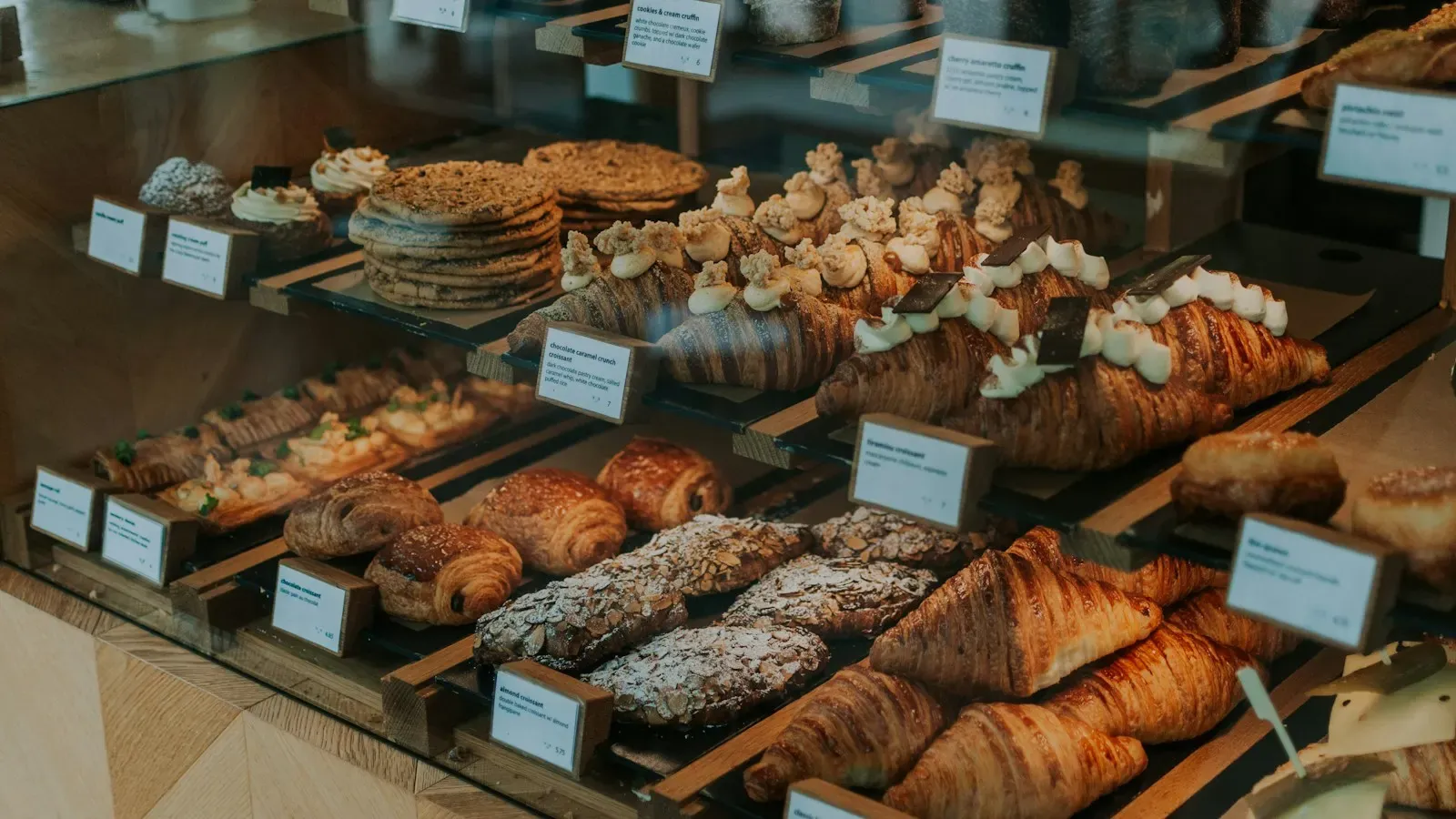
Wholesale bakery pricing has to leave room for two businesses. If your unit cost is $1.50 and you target a 30% baker margin, the wholesale price is $2.14. If the cafe then needs a 40% retail margin, its shelf price is about $3.57. The product cannot support both margins by optimism.
Wholesale is not “retail minus 30%.”
It is its own channel with larger orders, different handling, different payment patterns and another business that also needs a margin.
Wholesale bakery pricing with two margins
Start with unit cost:
$1.50
Baker wants 30% margin:
$1.50 / 0.70 = $2.142857
Wholesale price: $2.14
Cafe wants 40% margin:
$2.142857 / 0.60 = $3.571429
Suggested retail model: $3.57
| Layer | Amount |
|---|---|
| Your unit cost | $1.50 |
| Wholesale price at 30% baker margin | $2.14 |
| Cafe model retail at 40% margin | $3.57 |
| Baker gross profit per unit | $0.64 |
| Cafe gross profit per unit | $1.43 |
Those margins are examples, not industry commandments.
The useful point is structural: both businesses need a denominator.
Selling baked goods to cafes only works if the retail price works
Suppose the cafe says its customers will only pay $3.
At a $2.14 wholesale price, the cafe’s gross margin would be:
($3 - $2.142857) / $3 = 28.57%
Maybe that works for the cafe. Maybe it does not.
Your next move should not automatically be lowering wholesale.
You can change product size, packaging, recipe, order minimum, delivery terms or target channel.
Wholesale exposes weak unit economics quickly because the reseller needs room too.
Minimum orders protect setup economics
Use a 48-unit minimum.
At $2.142857 each:
revenue = $102.857143
At $1.50 cost each:
production cost = $72.00
Gross production profit:
$102.857143 - $72.00 = $30.857143
Rounded, that is about $30.86 before fixed overhead, delivery and transaction costs.
Why 48?
Because wholesale often gains efficiency from repeated units and fewer customer handoffs. If 12 units require almost the same setup, invoicing and delivery as 48, the larger order spreads those costs.
Pick a minimum from your actual workflow, not from the spiritual significance of four dozen.
Wholesale discount should come from efficiency
A lower wholesale price can make sense when the channel removes work.
Examples:
- one flavor instead of six
- one bulk pack instead of individual gift boxes
- one delivery instead of 12 pickups
- predictable weekly production
- fewer payment transactions
- less custom customer communication
Measure those savings.
If retail packaging costs $1.20 per item and wholesale tray packaging costs $0.25, that is real channel efficiency.
If labor per unit falls because you produce 96 identical items, that is real efficiency.
“Wholesale should be 50% off” is not a cost.
Resale certificates are state-specific
Sales tax is where a national wholesale guide must become careful.
The Streamlined Sales Tax Governing Board explains that exemption and resale documentation varies by state, and purchasers may need state-specific identification depending on the jurisdiction.
There is no single federal resale certificate that makes every bakery wholesale transaction tax-free.
A cafe may provide resale documentation because it is buying an item for resale. The exact form, registration requirement and treatment of food depend on the state.
Keep the certificate with your records when state rules require it.
Do not turn “wholesale” into “no sales tax” without checking the state.
Cottage food can block wholesale before pricing begins
Some state cottage-food frameworks limit indirect or wholesale sales.
California, for example, distinguishes Class A direct sales from Class B direct and indirect sales.
Your beautiful $2.14 wholesale price is not useful if your current home-production authorization does not allow the channel.
Check the cottage food laws for home bakeries guide before building a cafe route around a product made at home.
Delivery belongs in the wholesale account
A weekly cafe order can look efficient until you spend 70 minutes driving and parking.
Decide whether delivery is:
- included above a minimum
- charged separately
- restricted to a route day
- pickup only
Then cost the policy.
Do not silently fund delivery from the wholesale margin and later conclude “cafes are not profitable.”
Maybe the cafe is fine.
Maybe Tuesday traffic is your business partner.
Payment terms change cash flow, not recipe cost
Retail customers often pay at order or pickup.
Wholesale accounts may request invoicing terms.
If a cafe pays later, your business finances ingredients, labor and packaging until cash arrives.
That does not change the recipe’s unit cost, but it changes working capital and account risk.
Start new accounts with terms you can afford.
A 30-day invoice is not free because the spreadsheet waits politely.
Use exact product cost before negotiating
The bakery recipe cost calculator guide gives you the product cost.
The fixed vs variable bakery costs guide helps test whether a minimum order contributes enough to overhead.
The bakery profit calculator guide shows what the chosen wholesale price leaves.
And the bakery pricing calculator lets you test the production side with your own numbers.
Negotiate after those numbers exist.
A wholesale buyer can negotiate your price.
They cannot negotiate your flour invoice.
Wholesale price lists need an expiration date
Ingredient and packaging costs move.
A cafe can build its menu around your number and reasonably dislike surprise changes.
Give wholesale pricing a review cadence.
For example, quote prices as valid through a stated quarter and reserve the right to revise when material input costs change.
That is better than leaving a price untouched for eighteen months, discovering the margin is gone and asking the buyer to absorb a sudden 22% increase.
Predictability is part of wholesale value.
Samples need a cost owner
Wholesale acquisition often uses samples.
If you deliver a $20 sample box to ten potential accounts, that is $200 of product value before delivery time.
Do not bury those samples in the first cafe that says yes.
Track them as sales or marketing cost for the channel.
Then you can ask whether the wholesale program as a whole is earning back its acquisition cost.
A sample is not free because you baked it yourself.
That sentence has ruined enough small-business spreadsheets already.
A cafe account should have a reorder test
After four to eight weeks, compare the account with your assumptions:
- average units per order
- actual production time
- delivery time
- payment timing
- waste or returns
- retained gross profit
If the account orders 24 when your minimum economics assumed 48, the problem is visible.
If 96-unit orders take almost the same active time as 48, you may have more room than expected.
Wholesale pricing improves when it becomes a measured channel instead of a one-time negotiation.
The first price gets the account.
The reorder economics decide whether you want to keep it.
Wholesale production should have a cutoff
A cafe ordering 48 cookies every Friday is easier to plan than a cafe texting Thursday night for “somewhere between 30 and 70.”
Set an order cutoff that protects purchasing and production.
The cutoff can also define when changes become a new order rather than a casual adjustment.
That does not need to be unfriendly.
It needs to make the production plan real enough that the margin assumptions survive contact with Thursday afternoon.
Stop pricing by guesswork.
Add recipes, ingredients and packaging for free. When you want the price calculated for real, with inventory and sales, unlock Operations on the site or with a one-time purchase.



Still wondering?
01 How do I calculate wholesale bakery pricing?
Divide your unit cost by one minus your margin. In this example a $1.50 unit cost at a 30% baker margin gives $2.14.
02 What retail price supports a cafe margin?
About $3.57, if the cafe buys the item at $2.14 and wants a 40% margin.
03 What should my wholesale minimum order be?
One that fits your real workflow. The worked minimum here is 48 units, which produces about $102.86 of wholesale revenue and $30.86 of gross production profit.
04 Do I need a resale certificate for wholesale baked goods?
It depends on the state. There is no single national certificate: resale documentation and registration rules are set by each state.
05 Is wholesale cheaper than retail because profit disappears?
No. This example still builds in a 30% baker margin. A lower wholesale price should come from channel efficiency, not from deleting your margin.