How much to charge for cupcakes by the dozen
Price cupcakes by the dozen from a real batch cost, packaging, labor, yield and margin instead of copying another bakery.
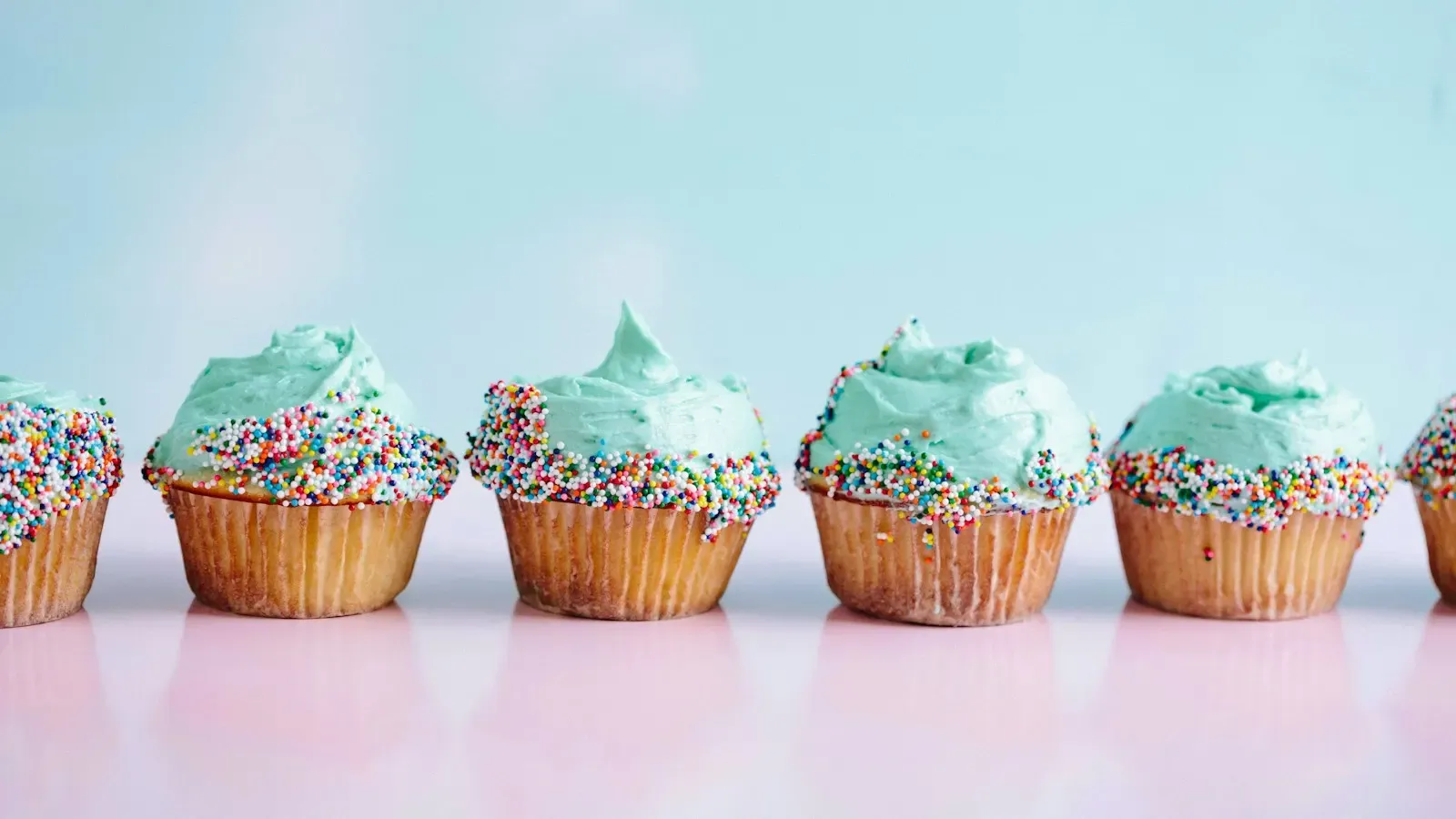
A cupcake cost calculator should tell you the cost of the dozen before it tells you what to charge. In this worked US example, 12 cupcakes cost $40.15 to produce. With a 40% margin, the model price is $66.92 per dozen, or about $5.58 each.
That may be higher or lower than your market. Good. The point is not to publish a national cupcake price. The point is to know what your batch needs before you decide whether the market, the recipe or your process has to change.
Start with the dozen
US customers buy cupcakes in boxes of six, twelve and more. Price the batch you actually package.
For this example:
| Item | Batch cost |
|---|---|
| Ingredients | $9.84 |
| Packaging | $1.31 |
| Labor | $27.00 |
| Batch extras | $2.00 |
| Total | $40.15 |
| Yield | 12 |
The cost per cupcake is $3.35.
A 40% margin means:
$3.35 / 0.60 = about $5.58 each
Using the unrounded batch math:
dozen price = $66.92
Do not multiply a rounded $5.58 by twelve and then wonder why you get $66.96. Either price from exact internal values or choose a deliberate menu price after the calculation.
Labor is the expensive ingredient nobody photographs
BLS reported a May 2025 national median baker wage of $17.86 per hour. The example rounds that to $18.
One and a half hours of active batch work costs $27.
That is nearly three times the ingredient line in this example. The customer sees buttercream. Your margin sees the 45 minutes you spent piping it.
If your decorated set takes two and a half hours, use two and a half. A copied market price does not shorten the clock.
The box matters more than the liner
A bulk white liner can cost about 2 cents. Twelve liners are roughly 24 cents.
Say a 12-compartment high-dome clamshell costs about $1.07 each when you buy the case.
Total packaging: about $1.31.
The liner is the comedy number. The box is the business number. Both belong in cost.
For a custom order, add inserts, toppers, stickers, ribbon and any protective outer bag that leaves with the customer.
Do not hide custom design time in “premium”
A plain swirl and a hand-piped character are not the same product because both sit on cake.
Separate custom design and decoration labor from the base cupcake if it changes by order. A 12-cupcake set with two hours of custom piping should carry those hours.
This also gives you a rational minimum order. If one hour of setup is spread over 12 cupcakes, it weighs heavily. Spread it over 48 and the setup cost per cupcake falls.
Discounts should come from actual economies of scale, not from the emotional force of the phrase “but I need four dozen.”
Payment method changes the net
If you take the $66.92 order in person with Square at a public rate of 2.6% plus 15 cents, the fee is roughly $1.89.
An online transaction at 3.3% plus 30 cents would be roughly $2.51.
Those are not identical percentages, and the fixed cents matter much more on small orders.
Do not bury every channel in one generic margin. Know the fee for the channel that closed the sale.
Farmers markets are a different cost shape
A farmers market often charges a booth or application fee. That cost belongs to the day or event first.
If a $60 booth fee produces 30 dozen-equivalent sales units, allocating $2 per unit gives you a starting point. If rain leaves you with ten, the event cost becomes $6 per unit.
That is why “the market takes 5%” is usually the wrong model unless that specific market actually does.
Cottage food rules can decide which cupcake you can sell
A shelf-stable cupcake may fit a cottage-food list in one state while a cream-filled or refrigeration-dependent version may trigger different rules.
Texas changed its cottage-food framework in 2025 and now has specific registration and safe-handling rules for time and temperature control foods. California maintains an approved cottage-food list and separates Class A and Class B sales. Ohio allows specified non-potentially-hazardous bakery products.
The frosting is not just a recipe choice. Sometimes it is a regulatory choice.
Use grams even when the store uses pounds
Your store sells flour by the 5 lb bag, about 2,270 g.
The costing step still uses grams. That matches professional baking practice, and it is the only weight unit the app accepts.
If you bake with cups, that is one extra step. It pays off: a cup of flour varies by about a fifth from one baker to the next.
Market check comes last
Once you know your $40.15 batch cost and $66.92 model price, compare local bakeries.
If comparable dozens sell for $45, you have information. Maybe your process is too slow, your ingredient choices are premium, your target margin is too high for the segment, or your market will not support the product.
What you do not have is permission to erase $21.92 from the spreadsheet and call the remainder “competitive.”
Cost first. Market second. Decision third.
Use your own values and see what to charge without doing the arithmetic by hand.
Stop pricing by guesswork.
Add recipes, ingredients and packaging for free. When you want the price calculated for real, with inventory and sales, unlock Operations on the site or with a one-time purchase.



Still wondering?
01 How much should I charge for 12 cupcakes?
$66.92 per dozen in this worked example at a 40% margin, before any separate channel-specific payment fee adjustment.
02 What is the cost per cupcake in this example?
$3.35 per cupcake before margin: $40.15 full batch cost divided by 12 sellable cupcakes.
03 How much labor should I put in cupcake pricing?
$27.00 in this example for 1.5 hours at a rounded $18/hour benchmark based on the May 2025 national baker median.
04 Does the cupcake box count as a cost?
Yes. In this batch $1.31 of packaging, liners and box, sits inside the cost base before margin.
05 Should I price cupcakes from competitor prices?
No. A competitor's menu tells you nothing about your own costs. Use their prices as a market check only after you know your own floor.