Home bakery pricing: how to price baked goods for profit
The pricing decision that comes after the costing: margin, rounding, fees, minimums and what to do when the number scares you.
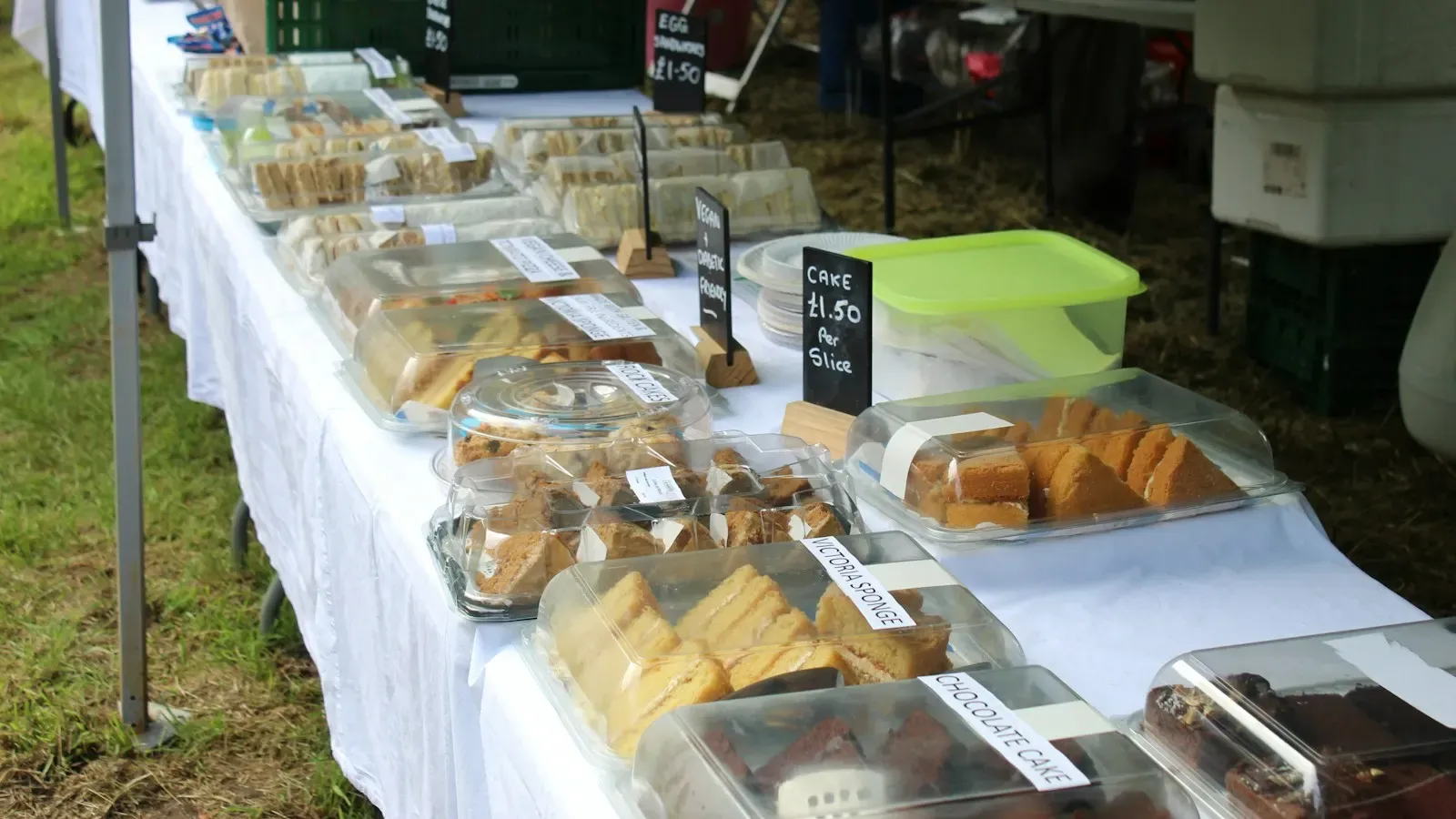
Home bakery pricing is two decisions, not one. First you cost the recipe, which is arithmetic. Then you pick a margin and turn that cost into a price, which is a business decision nobody can make for you. A $1.62 cookie at a 40% margin prices at $2.70. Whether $2.70 is the right number for your street, your week and your customers is the part the calculator cannot answer.
Most pricing advice for home bakers stops at “add up your ingredients.” That is the easy half. The hard half starts when the spreadsheet hands you a number and your stomach says nobody around here pays that for a cookie.
So let me split it properly.
Step 1: know the unit cost before you think about price
You cannot price what you have not costed. The guide to calculating the cost of baked goods runs the full method, and the short version is that a unit cost has four parts:
- ingredients, at the price of the portion you used, not the price of the bag
- packaging, including the box, the sticker and the ribbon you forget every time
- labor, at a rate you actually agree to work for
- batch extras: parchment, gas, the piping bag you threw away
The Bureau of Labor Statistics puts the median baker wage at $17.86 an hour as of May 2025. Round it to $18 and you have a defensible rate for a worked example. It is a benchmark, not an instruction, and it is certainly not the ceiling for the person who also does the sales, the delivery and the Instagram.
Say the cookie lands at $1.62 all in.
Step 2: pick a margin, then divide
Margin is the share of the selling price you keep. Markup is the share you add to cost. They are different numbers and mixing them up is the most expensive arithmetic error in this whole business.
For a 40% margin:
$1.62 / (1 - 0.40) = $2.70
For a 30% margin:
$1.62 / (1 - 0.30) = $2.3142857, so $2.32
Notice what happens if you “add 40%” instead:
$1.62 x 1.40 = $2.268
That is a 28.6% margin wearing a 40% badge. The margin and markup guide has the full comparison, and it is worth ten minutes because the mistake compounds on every order you take for the rest of the year.
| Target | Formula | Price on $1.62 |
|---|---|---|
| 30% margin | cost / 0.70 | $2.32 |
| 40% margin | cost / 0.60 | $2.70 |
| 50% margin | cost / 0.50 | $3.24 |
| 40% markup | cost x 1.40 | $2.27 |
Step 3: round, and round up
$2.70 is already clean. $2.3142857 is not, and a price like that makes you look like a spreadsheet instead of a bakery.
Round up, not down. Rounding $2.31 down to $2.25 costs you six cents. On a hundred cookies a week, that is $312 a year you handed over for tidiness.
Where the price actually comes from
Here is the part I will take a stance on: your price is not set by your competitor. It is set by your cost, your capacity and your customer, and the competitor is only useful as a sanity check at the end.
The bakery down the road buys flour on a different account, pays a different rent, and may well be quietly losing money on the exact item you are copying. Copying their number copies their problem.
What the competitor’s price does tell you is whether your number is sellable. If you calculate $2.70 and everyone within five miles sells the same cookie for $2, you have learned something real: either your cost structure is different, or your product has to be visibly different, or that product is not the one to build a business on.
That is information. It is not a pricing method.
Test the price against your week, not against one cookie
A price that works on one unit can still fail across a month. The Small Business Administration’s break-even formula is the simplest way to check:
fixed costs / (price - variable cost per unit) = units you must sell
Say your fixed monthly costs are $300: a share of the electricity, the insurance, the website, the card reader subscription. Variable cost per cookie is $1.62 and price is $2.70, so contribution per unit is $1.08.
$300 / $1.08 = 278 cookies a month
Now the question is not “is $2.70 fair?” It is “can I sell and bake 278 cookies a month before I earn anything?” If the honest answer is no, the price is too low for your cost base, and the fixed vs variable costs guide shows which side of the ledger to attack.
Fees come off the price, not off the cost
Square publishes 2.6% plus 15 cents for in-person tap, dip and swipe, and a higher online rate on its free tier. On a $2.70 sale, the in-person fee is about 22 cents.
Do not bury that inside the recipe cost. The recipe does not change when the customer pays with a card instead of cash. What changes is what lands in your account, and it changes per channel, which is exactly why it belongs in its own line. The payment processing fees guide works through the channel comparison.
One cookie, one fee, 22 cents. A hundred of those is $22 a month you never see, and the number of home bakers who have never once added it up is not small.
What to do when the price scares you
This is the moment most people quietly delete the margin. Do not.
Change the product instead. You have more levers than you think:
- Size. A smaller cookie at $2.20 can beat a bigger one at $2.70 that nobody buys.
- Packaging. A $1.07 clamshell on a $2.70 item is a design choice with a price tag. Kraft box and a sticker, and you just bought yourself margin.
- Batch size. Labor per unit falls when you bake 96 instead of 24. Same oven, same setup, same washing up.
- Minimum order. Six cookies at $2.70 is a sale. One cookie at $2.70 is a conversation that cost you fifteen minutes.
- Mix. Sell the $2.70 cookie next to a $14 box of six. People who balk at the unit price often take the box.
Cutting the margin is the only one of those that solves nothing. It does not make you faster, cheaper or better known. It just moves your break-even further away and hides the problem for another month.
Different channels, different prices
The same cookie should not cost the same everywhere, and that is not cheating.
A market stall carries booth fees and a whole Saturday. A wholesale order to a cafe has to leave margin for the cafe as well as for you, which the wholesale bakery pricing guide works through with real numbers. A custom order eats consultation time before a single egg is cracked.
One price for all of them means at least one of them is wrong.
Write the price down, with a date
Ingredient prices move. Your price list should have a review date on it, even if the review is just you opening the file every quarter and checking that the flour line still matches the receipt.
Ingredient costs that drifted for eighteen months are one of the most common reasons a busy home bakery makes no money. It is never one big shock. It is butter up twelve cents, eggs up thirty, boxes up a dime, and a price that never moved.
The guide to updating recipe costs when ingredient prices change covers how to do that without rebuilding anything.
A quick sanity checklist before you publish a price
- The cost includes labor at a rate you would accept from someone else.
- The margin was chosen, not left over.
- You divided by (1 - margin) instead of multiplying.
- You rounded up.
- Fees are tracked separately, per channel.
- You know how many units a month this price needs to cover fixed costs.
- There is a date on the price list.
Seven lines. If all seven hold, the number on your menu is a price. If any of them is missing, it is a guess with a decimal point.
Use your own values and see what to charge without doing the arithmetic by hand.
Still wondering?
01 How do I price baked goods?
$2.70 is the price in this example: a $1.62 unit cost divided by 0.60 for a 40% margin, then rounded up. Cost first, margin second, rounding third.
02 What margin should a home bakery use?
40% is the working example here, not a law. Pick the margin from what your week has to pay for, then check that the price it produces is one your customers will actually pay.
03 Should I price from my competitor?
$0 of their invoices are yours. Use competitor prices to test whether your number is sellable, never to decide what your number is.
04 Do card fees change my price?
2.6% + 15 cents per in-person tap on Square's published rate takes about $0.22 off a $2.70 sale. That is a margin question at the end, not a reason to rebuild the cost.
05 What if the price I calculate feels too high?
Change the product before you change the margin: smaller size, cheaper packaging, bigger batch, higher minimum order. Cutting the margin is the only lever that fixes nothing.
Sources
Stop pricing by guesswork.
Add recipes, ingredients and packaging for free. When you want the price calculated for real, with inventory and sales, unlock Operations on the site or with a one-time purchase.