Labor cost for a home bakery: how much to pay yourself
Put owner time into recipe cost using a defensible hourly benchmark and the hours that actually belong to each batch.
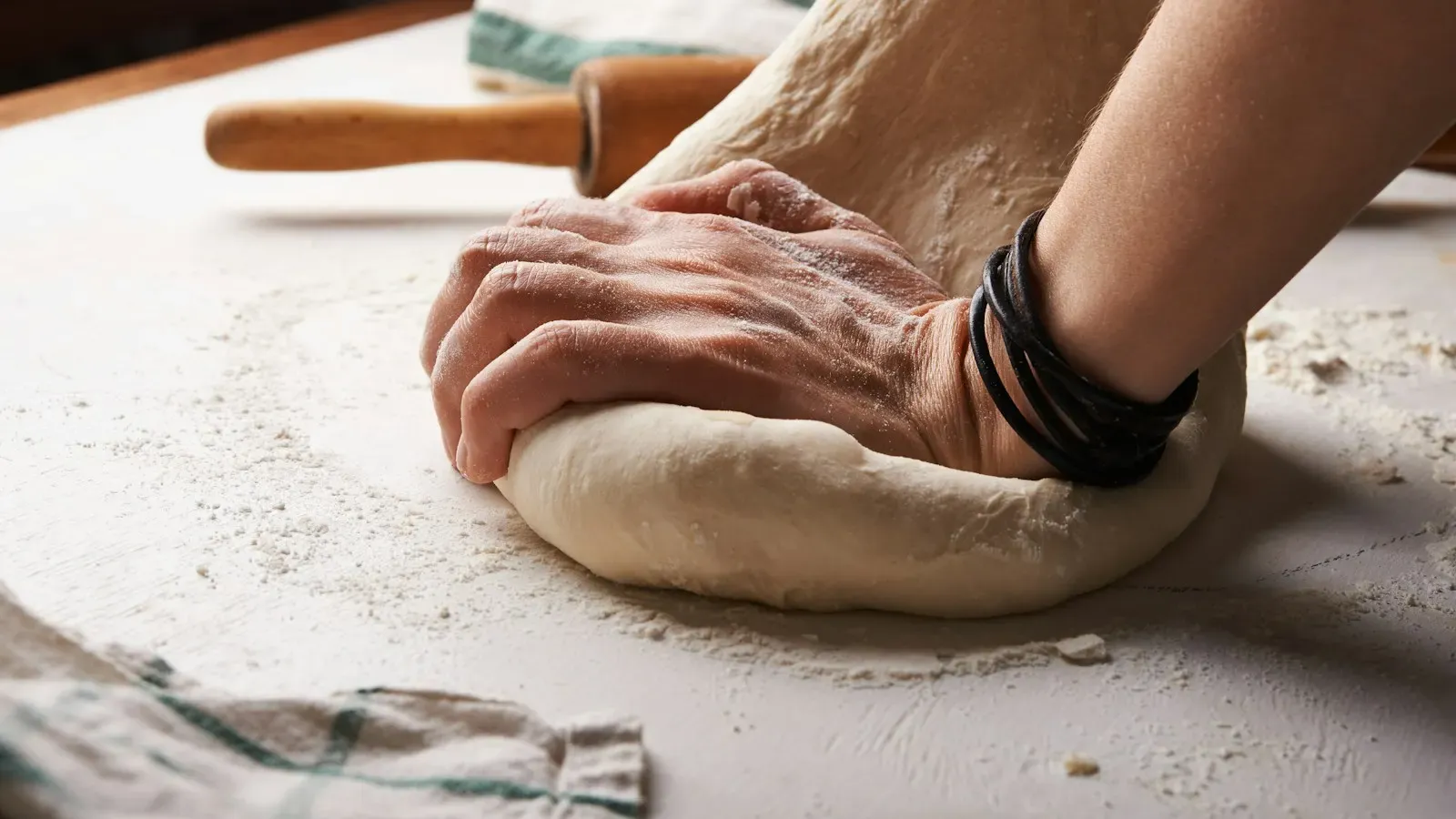
Labor cost in a home bakery is the value of the productive time your batch consumes. BLS reported a May 2025 median baker wage of $17.86 per hour, so this guide uses $18 as a round benchmark. In the worked batch, two productive hours add $36 to cost. Leaving those hours at zero cuts the model price by $2.31 per item.
Home bakers have a special talent for paying themselves last because the kitchen is already there and the hands are, conveniently, attached.
That accounting trick works beautifully until the order calendar fills up.
Your baking time isn’t free: choose an hourly benchmark
The Bureau of Labor Statistics reports $17.86 per hour as the median baker wage for May 2025.
That is not a legal owner draw and it is not a promise that every baker should use $17.86.
It is a useful external benchmark.
You might choose $18 because you want a neutral starting point. You might choose $25 because custom decorating requires more skill and the business must compensate you for it. You might choose a target based on the income you need from available productive hours.
What is not a benchmark is zero.
If you want the full costing method around labor, start with how to calculate the cost of baked goods.
Which hours count as productive baking time?
Count time that belongs to the batch:
- scaling ingredients
- mixing and shaping
- active oven loading and unloading
- decorating
- batch-specific cleanup
- packing and labeling
- order-specific prep that cannot be reused elsewhere
Do not automatically count every minute of fermentation, chilling or baking as hands-on labor.
If dough proofs for one hour while you decorate another order, the hour did not consume one full hour of your hands.
But capacity matters too. If a three-hour bake blocks your only oven and prevents another sale, that constraint belongs in your business model even if you were not staring through the oven door.
The point is not to make the number as big as possible. The point is to make it honest enough to schedule from.
A two-hour labor example
Use this 24-unit batch:
| Item | With labor | Labor set to zero |
|---|---|---|
| Ingredients | $11.00 | $11.00 |
| Packaging | $2.00 | $2.00 |
| Labor | $36.00 | $0.00 |
| Extras | $2.00 | $2.00 |
| Full batch cost | $51.00 | $15.00 |
| Unit cost | $2.13 | $0.63 |
| Price at 35% margin | $3.27 | $0.96 |
With labor:
($11 + $2 + $36 + $2) / 24 = $2.1250 unit cost
$2.1250 / 0.65 = $3.2692 price
With labor set to zero:
($11 + $2 + $0 + $2) / 24 = $0.6250
$0.6250 / 0.65 = $0.9615
The difference in model price is $2.31 per item.
Across 24 items, that is $55.38 of selling-price capacity erased by pretending the baker works for free.
The ingredients were never the expensive part of this batch.
How much to pay yourself baking is not the same as profit
Labor and profit do different jobs.
Labor compensates work.
Profit compensates the business for owning the risk, tying up capital, replacing equipment, absorbing slow weeks and producing a return after costs.
If you remove labor and call the remaining margin “my pay,” you cannot tell whether the product is profitable or merely generating wages.
That distinction is why the bakery profit calculator guide begins after unit cost, including labor, is known.
Productive hours are usually fewer than total hours
Suppose you work 30 hours in a week.
Not all 30 are billable to recipes. Some time goes to ordering, bookkeeping, posting, customer messages, cleaning the kitchen generally and buying supplies.
If only 20 hours are truly productive, a target of $600 in weekly owner labor means:
$600 / 20 = $30 per productive hour
Using $20 because you divided by all 30 hours would underprice the recipes that have to fund the week.
This is the same reason consultants care about utilization. A bakery just has more butter.
Allocate setup time where it belongs
Some labor is batch-level.
Mixing one bowl may take almost the same time whether you make 12 or 24 cookies. That can create a real economy of scale.
If setup takes 30 minutes and finishing takes one minute per item:
- 12 items use 42 minutes
- 24 items use 54 minutes
The second dozen does not double labor.
That is a legitimate reason for a larger-order price break. It is much better than “people expect a discount on four dozen.”
Cookie-specific batch economics belong in the cookie cost calculator guide.
Cake labor needs a design clock
Cakes expose labor mistakes quickly because the decoration can take longer than the baking.
Track a few orders by phase:
- bake and cool handling
- fill and crumb coat
- final finish
- custom decoration
- packing and handoff
After five similar cakes, you will know whether “this design takes about an hour” is true or something you say before spending 2 hours and 20 minutes on it.
The cake pricing by size guide uses this labor method inside a cake quote.
Labor belongs in the recipe even when you are the owner
Receitório’s costing model treats labor as part of the cost base.
That is the useful behavior.
If the business later hires someone, your recipe does not suddenly discover that piping has always consumed time. The cost model already knew.
Use the bakery pricing calculator with your actual productive hours. The useful hourly rate is the one that lets a full calendar pay you, not the one that makes today’s price look comfortable.
Track labor in batches before you trust an estimate
Do not build your permanent labor standard from one unusually smooth Saturday.
Time three to five normal batches.
Record active minutes by phase, then use a median or a realistic average.
For example:
| Phase | Batch 1 | Batch 2 | Batch 3 |
|---|---|---|---|
| Scaling and mixing | 22 min | 25 min | 23 min |
| Portioning | 18 min | 21 min | 19 min |
| Finishing | 31 min | 38 min | 34 min |
| Packing and cleanup | 24 min | 26 min | 25 min |
The fastest batch is not your business model.
The slowest batch may include an interruption that should not become a permanent cost standard either.
A few observations give you a defensible baseline.
Administrative work still has to be funded
Recipe labor usually captures production work.
The business also spends time on quotes, messages, bookkeeping, shopping and content.
You have two main ways to make those hours economically visible.
One is to include them in fixed overhead through a monthly owner-compensation or administrative-cost model.
The other is to build a separate order-handling allowance where the work is clearly order-specific.
What you should not do is assign every Instagram reply to one cookie batch at random.
Production labor should stay readable enough that you can compare recipes.
Capacity raises the value of an hour
An $18 benchmark can be reasonable when the calendar is open.
It can become too low when every available productive hour is already sold.
If you have 20 productive hours a week and demand for 30, the business cannot solve the extra ten hours by pretending time is cheaper.
You can raise prices, reduce product complexity, increase batch size, add equipment or hire help.
That is a capacity decision.
The labor rate is where the cost model starts showing it.
A price that only works when your own time is free is not a scalable price.
Stop pricing by guesswork.
Add recipes, ingredients and packaging for free. When you want the price calculated for real, with inventory and sales, unlock Operations on the site or with a one-time purchase.



Still wondering?
01 How much should I pay myself for baking?
Start from a benchmark: BLS puts the May 2025 US median baker wage at $17.86 an hour. Use it as a reference, not a mandatory owner rate.
02 How do I calculate labor cost for a batch?
$36 in this worked example. Two productive hours at $18 per hour are assigned to the 24-item batch.
03 Does oven time count as labor?
Not automatically. Count active work, plus any blocked oven capacity you can defend, not every minute a timer runs.
04 What happens if I leave labor out of pricing?
Your price drops for no good reason. In this example, $2.31 per item disappears from the model price when two hours of labor are set to zero.
05 Should cleanup count as bakery labor?
Yes, when it belongs to the batch. Batch-specific cleanup is productive time, just like mixing or packing.