How to price custom cakes and bakery orders
Quote custom work from time and risk, not from a cake chart: design hours, consultation, delivery, deposits and what to do when they ask for a discount.
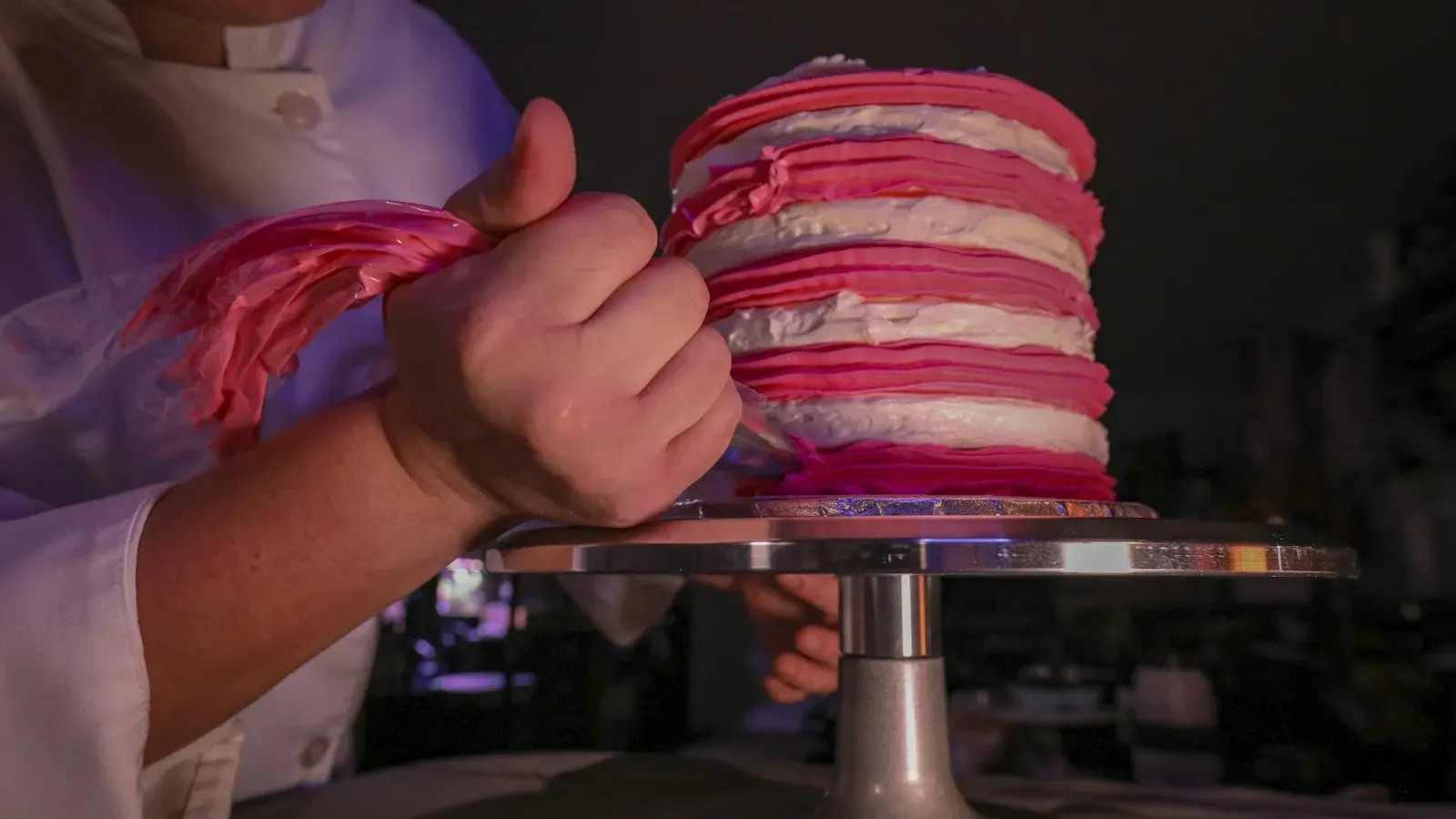
A custom cake is not a product with a price. It is a project, and you quote a project from time and risk. The worked example below turns $49.50 of production cost plus 3.25 hours of consultation and design into a $138 quote, with the consultation, the delivery and the deposit each visible on their own line instead of quietly swallowed by the cake.
Per-serving charts are everywhere and they are a trap for custom work. Two cakes can serve thirty people each and take four hours apart in decorating time. Charging both the same per slice means one of them is funding the other.
Start with the production cost, the same as any other product
Nothing about “custom” changes the arithmetic underneath. Ingredients at the price of the portion used, packaging, and the batch extras. The recipe cost sheet guide has the method in full.
Say an 8-inch, two-layer cake with buttercream and a filling comes to:
| Line | Amount |
|---|---|
| Ingredients | $16.40 |
| Board, box and dowels | $6.10 |
| Baking and assembly, 1.5 h at $18 | $27.00 |
| Production cost | $49.50 |
That $18 rate is the rounded national baker wage the Bureau of Labor Statistics reports (a $17.86 median as of May 2025). If you are also the designer, the salesperson and the driver, treating $18 as a floor rather than a target is entirely reasonable.
Then price the part that makes it custom
Design time is the whole difference, and it is the line most home bakers leave blank.
| Add | Time | Amount |
|---|---|---|
| Consultation and quote | 45 min | $13.50 |
| Sketch, color matching, shopping for a specific ribbon | 30 min | $9.00 |
| Hand-piped detail and finishing | 2 h | $36.00 |
| Design and client time | 3.25 h | $58.50 |
Now the cost is $49.50 + $58.50 = $108.00, before margin and before the van moves.
Look at that split for a second. More than half the cost of this cake is time that never touched an ingredient. That is why a per-serving chart cannot price custom work: the chart is measuring the wrong thing.
Add the margin, then round
At a 30% margin:
$108.00 / 0.70 = $154.29
At a 20% margin:
$108.00 / 0.80 = $135.00
Quote $138 and you are sitting just above a 20% margin with the rounding in your favor. Whether 20% or 30% is right depends on what your fixed costs need, which the break-even method settles better than any rule of thumb.
Delivery is its own line
A cake delivery is not a drop-off. It is a boxed, unstable object, driven slowly, carried in, and set up on someone else’s table while three relatives watch.
Seventy minutes of driving, parking and setup at $18 is $21, before fuel. Put it on the quote as its own line with distance bands:
- collection from me: $0
- up to 10 miles: $20
- 10 to 25 miles: $35
- beyond 25 miles: quoted per job
Two things happen when delivery is visible. Some customers collect, which gives you your Saturday morning back. The rest stop being surprised by the total.
Charge for the consultation, or credit it
Forty-five minutes on the phone about shades of dusty rose is work. You can handle it two ways and both are honest:
- Build it into every quote, as above, and accept that the quotes you lose were partly funded by the ones you won.
- Charge a consultation fee up front and credit it in full against a confirmed order.
Option two filters. People who will not pay $25 to hold an hour of your attention were rarely going to book. If most of your consultations turn into orders, option one is simpler and nobody notices.
What does not work is doing it for free and then wondering where Tuesday went.
Deposits exist to cover what you cannot get back
A 50% deposit is common, but the number matters less than the reasoning. Ask what you lose if the order evaporates two days out:
- ingredients bought for that specific cake
- a Saturday you turned other work down for
- design work already done
- specialty items ordered in, like a custom topper
If that adds up to more than your deposit, your deposit is too small. Write the cancellation window into the quote, in plain language, before you take the money. “50% deposit, non-refundable within 7 days of the collection date” is a sentence, not a legal document, and it prevents most of the arguments.
When they ask you to come down
They will. The answer is not “no” and it is definitely not “yes.”
The answer is: what would you like to take out?
- buttercream finish instead of hand-piped detail: $36 back on the table
- one tier instead of two
- standard flavor instead of the one that needs a special-order ingredient
- collection instead of delivery: $20
- a simpler topper
Now the customer is choosing their own price, which they mostly enjoy, and your margin is untouched. The alternative, knocking $30 off the quote to be nice, takes that $30 straight out of your own pay. There is no other place for it to come from.
Put a date on the quote
Quote validity is a small line that saves a big argument. “This quote is valid for 30 days” is enough. Butter moves, chocolate moves, and a quote you gave in March for a September wedding was priced with March’s invoices.
The guide to updating recipe costs when ingredient prices change is about exactly that drift, and custom orders are where it bites hardest, because the gap between quoting and baking can be months.
Card fees on a big ticket are not small
Square publishes 2.6% plus 15 cents for in-person card payments. On a $138 cake that is about $3.74. Take deposit and balance separately and you pay the fixed part twice.
It will not sink you. It is also not nothing, and it belongs on the same page as the rest of the numbers rather than as a surprise on the statement. The payment fees guide has the channel-by-channel comparison.
What a good custom quote looks like
Send the customer a total, but keep the breakdown where you can see it:
| Line | Amount |
|---|---|
| Production cost | $49.50 |
| Design and client time | $58.50 |
| Margin | $30.00 |
| Delivery, 10 miles | $20.00 |
| Quoted total | $158.00 |
Deposit 50% on booking, balance on collection, quote valid 30 days.
That is a quote you can defend line by line, adjust line by line, and compare against the actual hours afterwards. Which is the last step, and the one almost nobody does: after the cake goes out, write down how long it really took.
Do that five times and you will stop guessing at design hours forever. Your quotes will also get bigger, because the real number is almost always higher than the one you hoped for.
Still wondering?
01 How do I price a custom cake?
$138 in this example: $49.50 of production cost, 3.25 hours of consultation and design at $18, then a margin on top. Custom work is priced from time, not from a per-serving chart.
02 Should I charge a consultation fee?
45 minutes is a normal consultation, and it is unpaid work if you do not price it. Either build it into the quote or charge it separately and credit it against a confirmed order.
03 How much deposit should I take on a custom order?
50% is the common split, and the useful question is whether the deposit covers what you cannot recover: ingredients bought, dates blocked and design work already done.
04 How do I price delivery for a cake?
70 minutes of driving and parking is 70 minutes. Price delivery as a separate line by distance band so it is visible, not absorbed into the cake.
05 What do I do when a customer asks for a discount?
$0 should come off the margin. Take something out of the cake instead: simpler finish, fewer tiers, standard flavor, collection instead of delivery.
Sources
Stop pricing by guesswork.
Add recipes, ingredients and packaging for free. When you want the price calculated for real, with inventory and sales, unlock Operations on the site or with a one-time purchase.