How much does it cost to bake a loaf of bread?
A full loaf-cost example that separates ingredient cost from active labor, packaging and margin, with a clear hobbyist versus seller distinction.
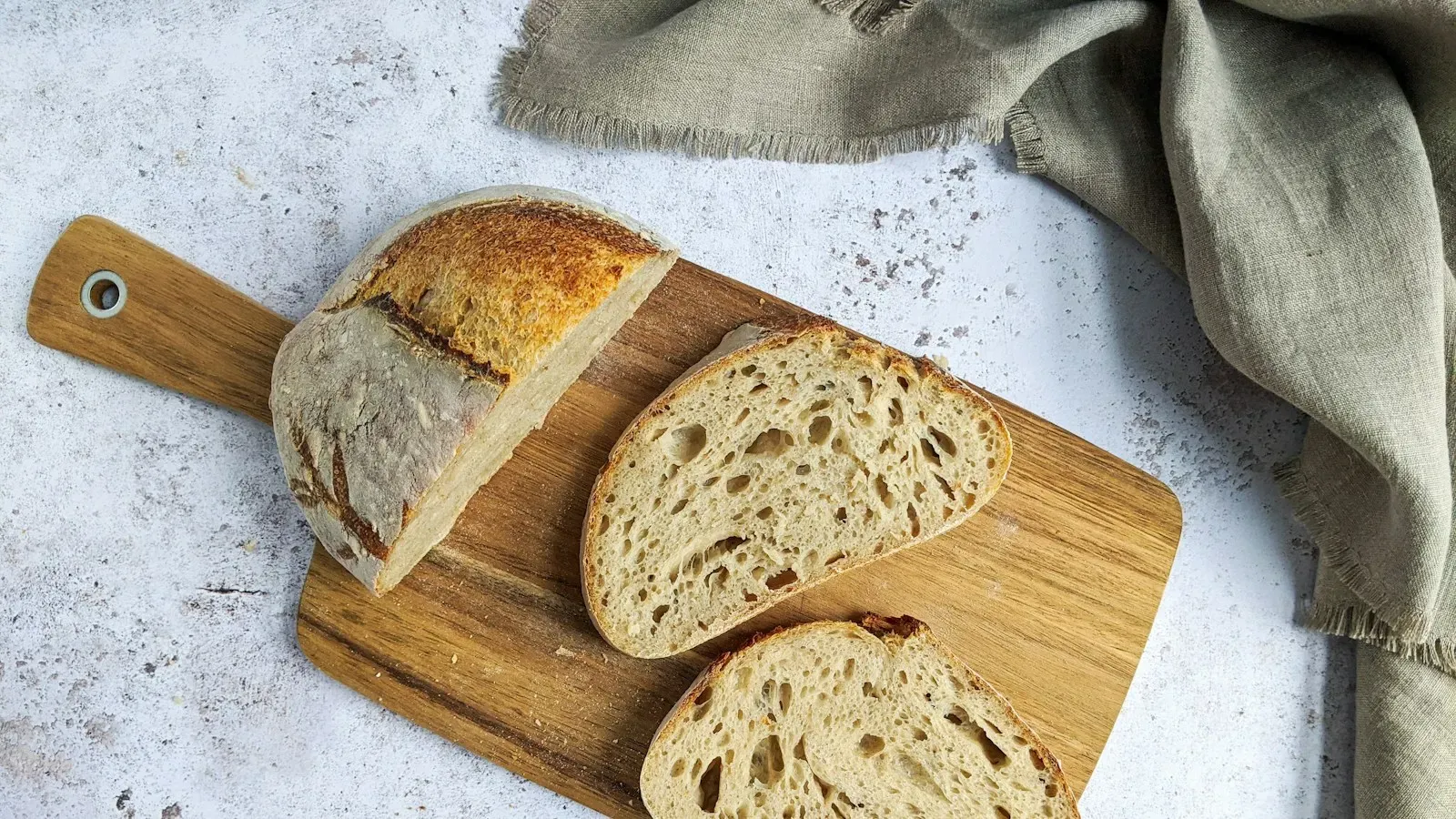
How much does it cost to bake a loaf of bread? For a seller, the answer is more than flour and yeast. This worked loaf costs $9.00 after $2.37 of ingredients, about $0.03 of packaging, $6.00 of active labor and $0.60 of batch extras. At a 35% margin, the exact model price is $13.85.
For a hobbyist asking whether homemade bread saves grocery money, $9 can look absurd. For a baker asking whether a loaf pays for 20 minutes of active work, leaving labor out looks equally absurd. This guide gives both answers: the ingredient cost first, then the full cost for a seller.
How much does it cost to bake a loaf of bread: worked example
One loaf:
| Item | Cost |
|---|---|
| Ingredients | $2.37 |
| Packaging | $0.03 |
| Active labor, 20 minutes at $18/hour | $6.00 |
| Batch extras | $0.60 |
| Full loaf cost | $9.00 |
| Yield | 1 loaf |
Unit cost:
($2.37 + $0.03 + $6.00 + $0.60) / 1 = $9.00
Price at a 35% margin:
$9.00 / 0.65 = $13.846154
Published as $13.85. This is not a claim that a standard loaf in your town sells for $13.85. It is what this example needs under this labor assumption.
Ingredient cost per loaf is much lower than full cost
A 5 lb bag of flour is about 2,270 g.
At an example price of $8:
$8 / 2,270 g = about $0.0035 per g
A 500 g flour portion therefore costs about $1.76. Add smaller amounts for fat, egg, sugar, salt and yeast and an ingredient total around $2.37 is plausible for this worked loaf. The exact recipe determines the exact number.
If you are costing sourdough with premium flour, seeds and inclusions, use those prices. If you are making a basic sandwich loaf, do not borrow somebody else’s walnut-and-cranberry cost.
The bakery recipe cost calculator guide explains how package prices become recipe quantities.
A bread bag can cost three cents and still belong in the math
Say a case of 1,000 clear bread bags costs $30.
That is:
$30 / 1,000 = $0.03 per bag Three cents is not what makes this loaf expensive. It still belongs there.
If you omit every small cost because none is individually dramatic, the batch eventually collects a committee of invisible expenses. For packaging math across products, see packaging cost for baked goods.
Labor is the commercial fork in the road
The BLS median baker wage benchmark is $17.86 per hour. This example rounds to $18.
Twenty active minutes is one-third of an hour:
$18 x 1/3 = $6
That is larger than the ingredient cost. For a hobbyist, the six dollars may not matter because the point is spending time baking. For a seller, the six dollars is the point.
If you sell ten loaves and each needs 20 truly active minutes, you used more than three productive hours before cleaning, customer communication or delivery. The labor cost home bakery guide shows how to decide what time belongs to a product.
Do not bill fermentation minute for minute
Bread has a lot of elapsed time and less active time. Mixing, folds, shaping, loading, unloading and packing are active. Bulk fermentation and proofing can overlap with other work.
A useful cost model tracks active labor and then separately considers capacity. If your proofing space or oven becomes the bottleneck, that constraint can limit revenue even when your hands are free. Do not solve that by charging eight hours of labor to a loaf that spent most of the day sitting quietly.
Cost per loaf changes fast with batch size
Suppose two loaves require only five extra active minutes compared with one loaf. The ingredient cost nearly doubles, but labor does not. That can make a two-loaf batch materially cheaper per loaf.
This is the real source of volume efficiency: shared setup and shared active work. It is also why a wholesale bread order may support a lower per-loaf price than one custom pickup, assuming the production process actually gains efficiency. The wholesale pricing guide works through that two-margin question.
Electricity belongs in extras if you can measure it
The example uses $0.60 of batch extras as a placeholder for small production-specific costs. If you can measure oven energy more accurately, replace the placeholder.
Do not invent a national “one loaf uses 47 cents of electricity” number. Utility rates and ovens vary too much.
The useful rule is local measurement. Use the appliance power rating, bake time and your own utility rate if the number is material.
Saving money and selling bread are different questions
A home cook can use the ingredient section and stop there. A seller must continue through labor, packaging, yield, margin and channel costs. If you sell, put your own numbers into the bakery pricing calculator and let them decide whether the loaf belongs on the menu.
A commercial loaf needs a consistent finished weight
Bread loses water in baking. That means dough weight and finished loaf weight are not the same thing. If customers expect a standard loaf, weigh finished products across several batches and define the sellable standard.
A recipe that sometimes yields a 680 g loaf and sometimes a 560 g loaf is not one commercial unit just because the pan is the same. The cost per loaf may stay similar while customer value changes. Standardization protects both sides.
Stale and unsold bread belongs to yield economics
Bread has a shorter selling window than many cookies. If you bake ten loaves for a market and regularly sell eight, the two unsold loaves are not a philosophical problem. They are production cost.
One way to model that is expected sell-through.
If a ten-loaf run costs $90 and average sellable revenue must recover the batch through eight sold loaves:
$90 / 8 = $11.25 effective cost per sold loaf before margin
That is very different from $9 based on ten theoretically sellable loaves. For preorder businesses, waste can be much lower. For speculative market production, sell-through deserves its own historical number.
Two numbers, two questions
Ingredient-only cost answers the household question. Full production cost answers the seller question. That distinction is stronger than forcing one number to serve both audiences.
If you only want to know what flour and butter cost, you can stop at the ingredient table. If you sell, labor and margin are not optional footnotes. They are the difference between a recipe calculation and a business calculation.
Use your own values and see what to charge without doing the arithmetic by hand.
Stop pricing by guesswork.
Add recipes, ingredients and packaging for free. When you want the price calculated for real, with inventory and sales, unlock Operations on the site or with a one-time purchase.



Still wondering?
01 How much does it cost to bake a loaf of bread?
$9.00 in this seller-style example including ingredients, a bag, 20 minutes of active labor and batch extras.
02 How much do the ingredients in a loaf cost?
$2.37 in the worked example. Labor is larger than the ingredient line once owner time is included.
03 How much should I charge for a loaf of bread?
In this example, $13.85: the $9.00 loaf cost at a 35% margin.
04 Should rising and oven time count as labor?
No, only active time. The $6.00 of labor here is about 20 active minutes at $18/hour, not every minute the dough ferments or bakes.
05 Can I enter pounds in Receitório for bread?
No. Recipe quantities in the app are metric. Record the 5 lb bag you buy as about 2,270 g.